Gears – Axe Grind – Part 2 – Rod Cumberland
From Rod Cumberland/East Coast Lumberjack, a tutorial on axe grinding basics.
In this video, he is working on a “China” axe.
Lumberjack sport guide
From Rod Cumberland/East Coast Lumberjack, a tutorial on axe grinding basics.
In this video, he is working on a “China” axe.
From Rod Cumberland/East Coast Lumberjack, a tutorial on axe grinding basics.
In this video, he is working on a “China” axe.
2025 Lake Effect Lumberjack Classic
16″ White Pine Jack & Jill Championship
2024 Jack & Jill record is still valid.
Hamburg Brewing Company, 6553 Boston State Rd, Hamburg, NY 14075, US
2024 Lake Effect Lumberjack Classic
16″ White Pine Jack & Jill Championship
New World Record: 4.51 Seconds in that event
Hamburg Brewing Company, 6553 Boston State Rd, Hamburg, NY 14075, US
2023 Lake Effect Lumberjack Classic
16″ White Pine Jack & Jill Championship
Hamburg Brewing Company, 6553 Boston State Rd, Hamburg, NY 14075, US
Je veux utiliser cette page pour aider les compétiteurs à comprendre ce qu’est un godendart et comment ça fonctionne. J’essaierai d’être aussi précis que possible afin d’aider les gens à utiliser la leur au maximum de son potentiel.
Aussi, J’aimerais remercier Jean-Pierre Mercier pour m’avoir donné son avis sur les sujets abordés sur cette page.
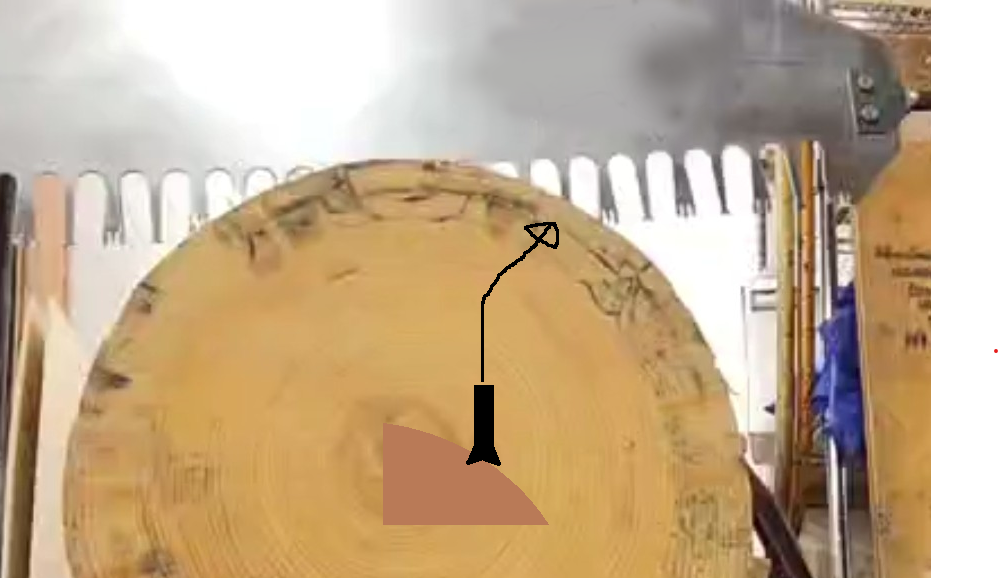
Une bonne façon de démarrer une coupe est de laisser quelques dents en dehors du trait et que seulement la moitié du râteau (raker) touche au bois. De cette façon, en tirant, la scie va glisser sur le talon du râteau.
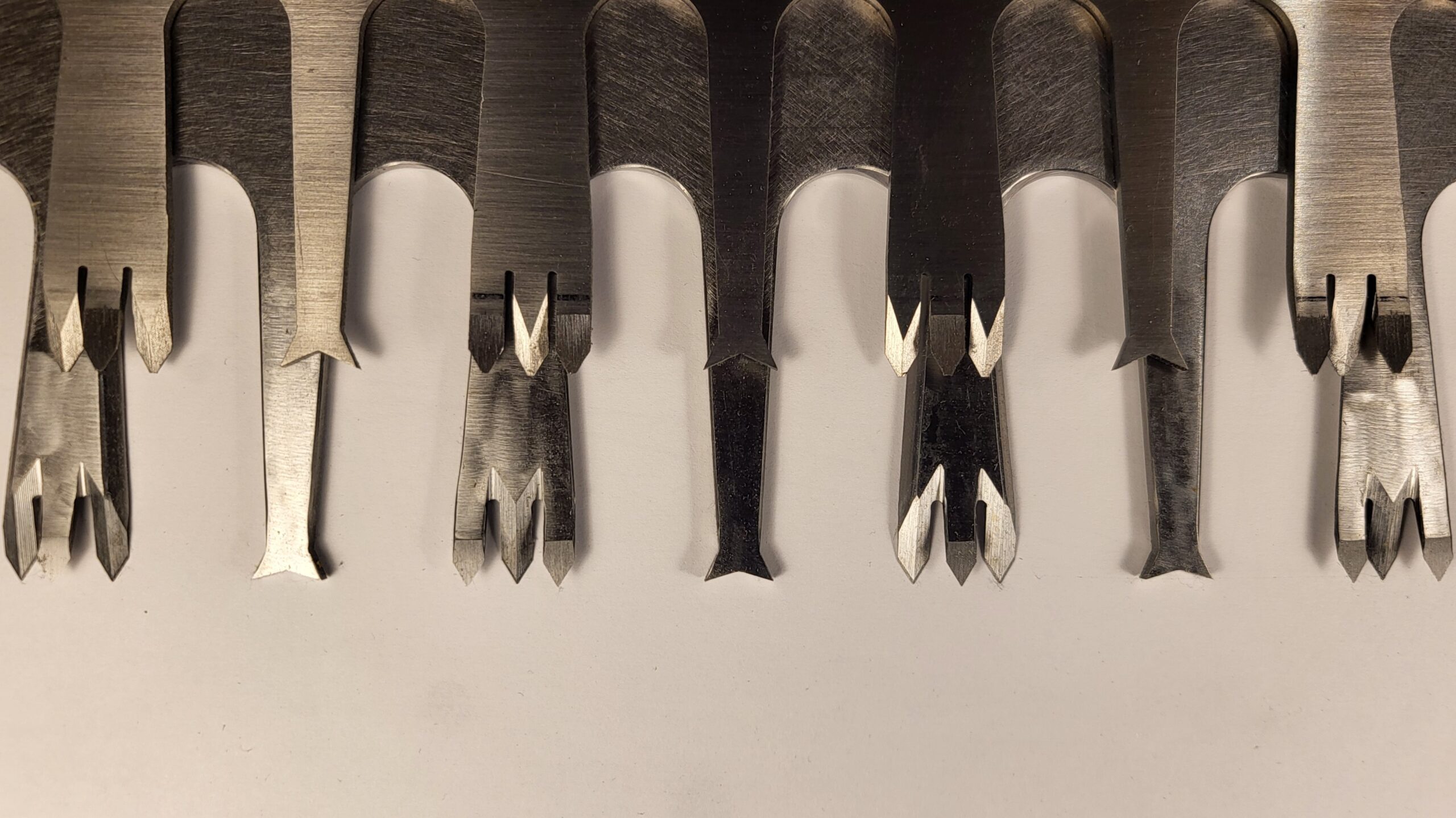
Voici un exemple de 2 sortes de scies à 3 dents.
Celle du haut a des gorges plus étroites et un ratio de dents plus élevé que la scie du bas.
La scie du bas est plus épaisse et plus lourde. Elle a aussi des gorges plus larges. (À noter, ce sont des scies en cours de réparation. c’est normal que les dents ne soient pas pointues)
| 5’1” | 5’3” | 5’4” | 5’6” | 5’8” | 5’10” | |
| 8” | 1 | 2 | 2 | 3 | 4 | 4 |
| 9” | 1 | 2 | 2 | 3 | 4 | 4 |
| 10” | 1 | 1 | 2 | 3 | 3 | 4 |
| 11” | 1 | 1 | 2 | 2 | 3 | 3 |
| 12” | 1 | 1 | 1 | 2 | 3 | 3 |
| 13” | 2 | 1 | 1 | 2 | 3 | 3 |
| 14” | 2 | 2 | 1 | 1 | 2 | 3 |
| 15” | 2 | 2 | 1 | 1 | 2 | 3 |
| 16” | 3 | 2 | 1 | 1 | 2 | 2 |
| 17” | 3 | 3 | 2 | 1 | 2 | 2 |
| 18” | 3 | 3 | 2 | 1 | 1 | 2 |
| 19” | 3 | 3 | 2 | 1 | 1 | 1 |
| 20” | 4 | 3 | 3 | 2 | 1 | 1 |
| 22” | 4 | 4 | 3 | 2 | 1 | 1 |
| 24” | 4 | 4 | 3 | 3 | 1 | 1 |
| 5’8” | 5’10” | 6’0” | 6’1” | 6’2” | 6’3” | 6’4” | |
| 12” | 1 | 2 | 3 | 3 | 3 | 4 | 4 |
| 13” | 1 | 2 | 3 | 3 | 3 | 3 | 4 |
| 14” | 1 | 1 | 2 | 2 | 3 | 3 | 3 |
| 15” | 1 | 1 | 1 | 2 | 2 | 3 | 3 |
| 16” | 2 | 1 | 1 | 1 | 2 | 2 | 3 |
| 17” | 2 | 1 | 1 | 1 | 1 | 2 | 2 |
| 18” | 3 | 2 | 1 | 1 | 1 | 2 | 2 |
| 19” | 3 | 2 | 1 | 1 | 1 | 1 | 2 |
| 20” | 3 | 3 | 2 | 1 | 1 | 1 | 1 |
| 22” | 4 | 3 | 2 | 2 | 1 | 1 | 1 |
| 24” | 4 | 4 | 3 | 2 | 2 | 1 | 1 |
I want to use this page to help competitors understand what is a crosscut saw and how it work. I will try to be as accurate as possible so it can help people use their saw to its maximum potential. Also, I want to thanks JP Mercier for his input on making this page as accurate as possible.
1st: The Handles.
2nd: Saws Types
A good way to start a cut is by placing a few set of teeth out of the wood and to sit half the raker in the wood and the other half in the air. It help to prevent hangs when there is a delay before a start signal.
3rd: The Saw Weight
4th: The Gullets
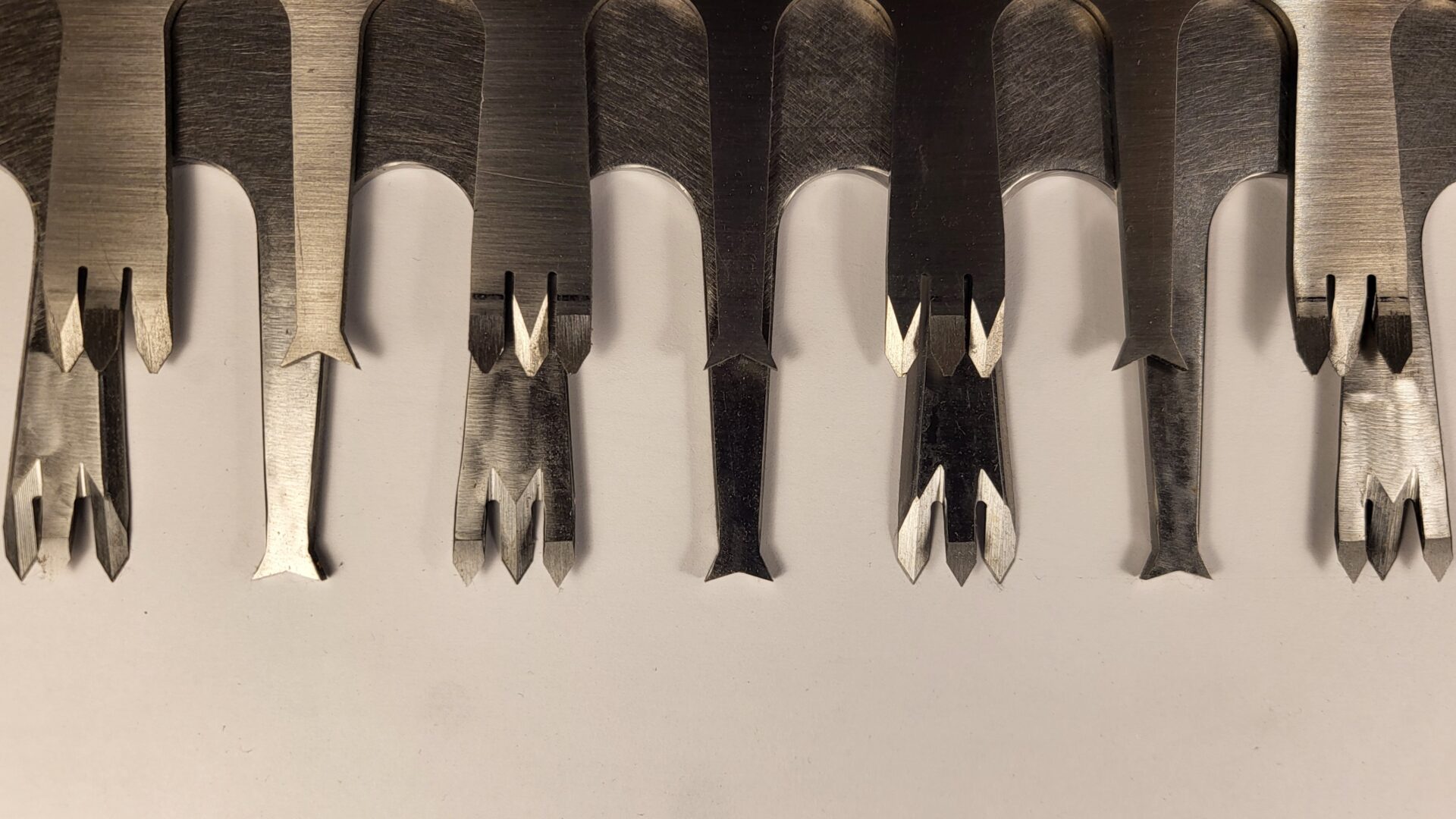
Here is an example of two types of 3 cutters saws.
Top one with more teeth and smaller gullets.
Bottom one is heavier with bigger gullets.
Both saws are in need of a refile.
5th, The Saw Radius
6th, The Set
7th, The Saw Length
| 5’1” | 5’3” | 5’4” | 5’6” | 5’8” | 5’10” | |
| 8” | 1 | 2 | 2 | 3 | 4 | 4 |
| 9” | 1 | 2 | 2 | 3 | 4 | 4 |
| 10” | 1 | 1 | 2 | 3 | 3 | 4 |
| 11” | 1 | 1 | 2 | 2 | 3 | 3 |
| 12” | 1 | 1 | 1 | 2 | 3 | 3 |
| 13” | 2 | 1 | 1 | 2 | 3 | 3 |
| 14” | 2 | 2 | 1 | 1 | 2 | 3 |
| 15” | 2 | 2 | 1 | 1 | 2 | 3 |
| 16” | 3 | 2 | 1 | 1 | 2 | 2 |
| 17” | 3 | 3 | 2 | 1 | 2 | 2 |
| 18” | 3 | 3 | 2 | 1 | 1 | 2 |
| 19” | 3 | 3 | 2 | 1 | 1 | 1 |
| 20” | 4 | 3 | 3 | 2 | 1 | 1 |
| 22” | 4 | 4 | 3 | 2 | 1 | 1 |
| 24” | 4 | 4 | 3 | 3 | 1 | 1 |
| 5’8” | 5’10” | 6’0” | 6’1” | 6’2” | 6’3” | 6’4” | |
| 12” | 1 | 2 | 3 | 3 | 3 | 4 | 4 |
| 13” | 1 | 2 | 3 | 3 | 3 | 3 | 4 |
| 14” | 1 | 1 | 2 | 2 | 3 | 3 | 3 |
| 15” | 1 | 1 | 1 | 2 | 2 | 3 | 3 |
| 16” | 2 | 1 | 1 | 1 | 2 | 2 | 3 |
| 17” | 2 | 1 | 1 | 1 | 1 | 2 | 2 |
| 18” | 3 | 2 | 1 | 1 | 1 | 2 | 2 |
| 19” | 3 | 2 | 1 | 1 | 1 | 1 | 2 |
| 20” | 3 | 3 | 2 | 1 | 1 | 1 | 1 |
| 22” | 4 | 3 | 2 | 2 | 1 | 1 | 1 |
| 24” | 4 | 4 | 3 | 2 | 2 | 1 | 1 |
Also known as PA Championship.
Started in 2016. This show is attended by some of the top competitors to measure their abilities.
The form to participate in the 2025 edition is available here:
lumberjacknjill.com or me are not responsible for any lost emails, delays or anything negative that could happen to you.
This information is posted here for your convenience.
Woodsmen’s Field Days, Boonville, NY, US
If you want to participate, you can find the required forms here.
Read and fill out all four files as required.
You will find the email where you must send those in the Registration Form.
A big thank you to Phyllis W White – Executive Coordinator
For 2025, Deadline is June 15th
lumberjacknjill.com or me are not responsible for any lost emails, delays or anything negative that could happen to you.
This information is posted here for your convenience.
Jack & Jill is back on the saturday. New forms are coming. Probably an extra 25$ for the men’s who participate. (Same price the ladies bay to be on the Sunday list)
A tutorial on how to run a Hotsaw. In most competitions, the hotsaw rules are pretty open.
You run a 1 cylinder engine and have to crank it yourself.
Safety equipments are mandatory.
Big thanks to Michael Flaherty for the long version of this nice tutorial.
A tutorial with Jason Wynyard and Warrick Hallet on how to run the Single Buck Saw.
Keep in mind, you should follow tips and trick for this event from people who are closer to your body type.
Big thanks to Michael Flaherty for the long version of this nice tutorial.
A tutorial with Dave Jewett on one of the most spectacular and dangerous event in the lumberjack competition.
Do not attemps it without supervision and experience in relevent events.
This event can be dangerous and mistakes can lead to serious injuries.
Big thanks to Michael Flaherty for the long version of this nice tutorial.