Gears – Axe Grind – Part 2 – Rod Cumberland
From Rod Cumberland/East Coast Lumberjack, a tutorial on axe grinding basics.
In this video, he is working on a “China” axe.

Guide sur le Bûcheronnage Sportif
From Rod Cumberland/East Coast Lumberjack, a tutorial on axe grinding basics.
In this video, he is working on a “China” axe.
From Rod Cumberland/East Coast Lumberjack, a tutorial on axe grinding basics.
In this video, he is working on a “China” axe.
Je veux utiliser cette page pour aider les compétiteurs à comprendre ce qu’est un godendart et comment ça fonctionne. J’essaierai d’être aussi précis que possible afin d'aider les gens à utiliser la leur au maximum de son potentiel. Aussi, J'aimerais remercier Jean-Pierre Mercier pour m'avoir donné son avis sur les sujets abordés sur cette page.
1 : Les poignées
2: Les types de scies
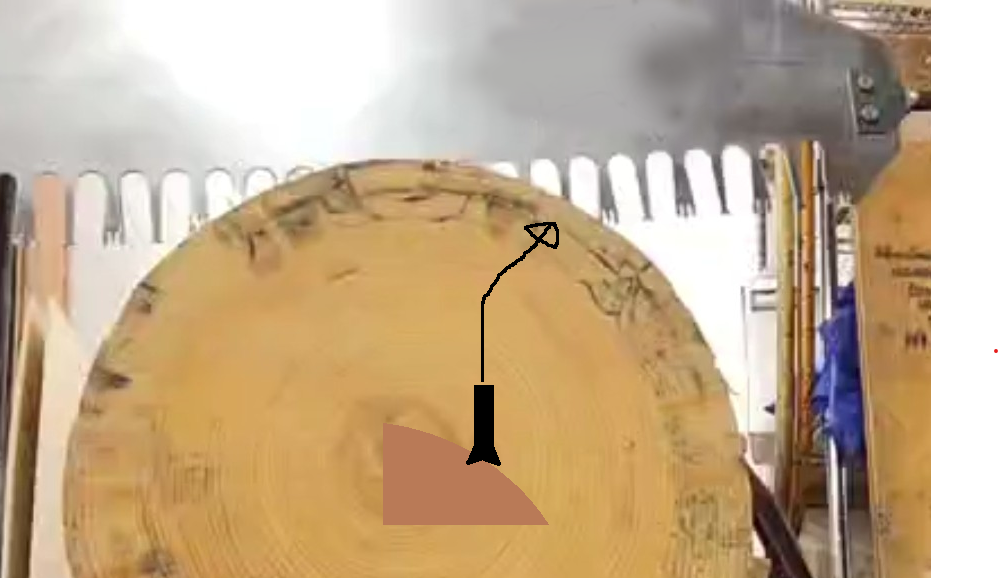
Une bonne façon de démarrer une coupe est de laisser quelques dents en dehors du trait et que seulement la moitié du râteau (raker) touche au bois. De cette façon, en tirant, la scie va glisser sur le talon du râteau.
3: Le poids de la scie
4: Les Gorges (Le rangement)
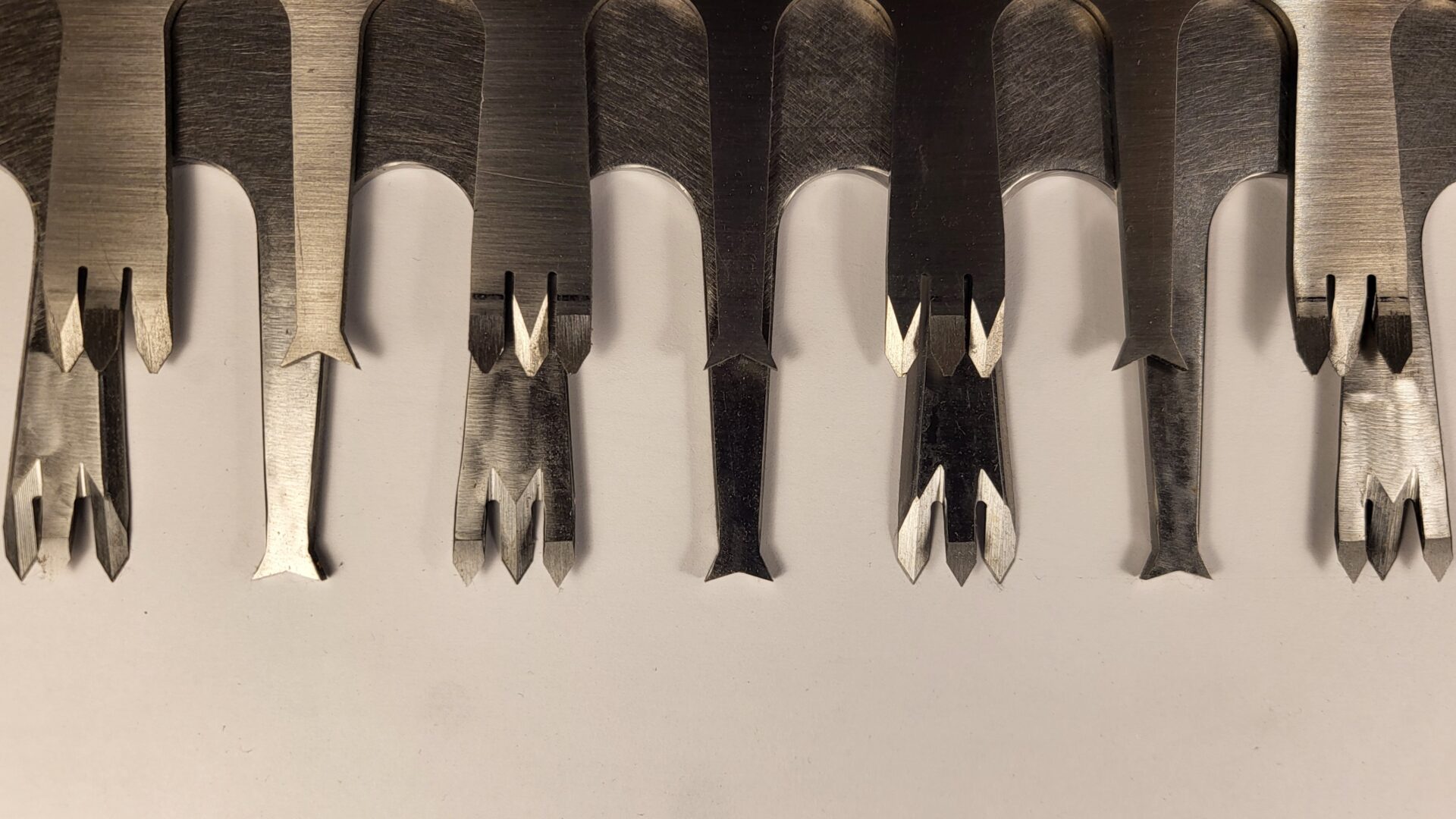
Voici un exemple de 2 sortes de scies à 3 dents.
Celle du haut a des gorges plus étroites et un ratio de dents plus élevé que la scie du bas.
La scie du bas est plus épaisse et plus lourde. Elle a aussi des gorges plus larges. (À noter, ce sont des scies en cours de réparation. c'est normal que les dents ne soient pas pointues)
Both saws are in need of a refile.
5: Rayon de la scie
6: Le chemin
7: La longueur de la scie
| 5’1” | 5’3” | 5’4” | 5’6” | 5’8” | 5’10” | |
| 8” | 1 | 2 | 2 | 3 | 4 | 4 |
| 9” | 1 | 2 | 2 | 3 | 4 | 4 |
| 10” | 1 | 1 | 2 | 3 | 3 | 4 |
| 11” | 1 | 1 | 2 | 2 | 3 | 3 |
| 12” | 1 | 1 | 1 | 2 | 3 | 3 |
| 13” | 2 | 1 | 1 | 2 | 3 | 3 |
| 14” | 2 | 2 | 1 | 1 | 2 | 3 |
| 15” | 2 | 2 | 1 | 1 | 2 | 3 |
| 16” | 3 | 2 | 1 | 1 | 2 | 2 |
| 17” | 3 | 3 | 2 | 1 | 2 | 2 |
| 18” | 3 | 3 | 2 | 1 | 1 | 2 |
| 19” | 3 | 3 | 2 | 1 | 1 | 1 |
| 20” | 4 | 3 | 3 | 2 | 1 | 1 |
| 22” | 4 | 4 | 3 | 2 | 1 | 1 |
| 24” | 4 | 4 | 3 | 3 | 1 | 1 |
| 5’8” | 5’10” | 6’0” | 6’1” | 6’2” | 6’3” | 6’4” | |
| 12” | 1 | 2 | 3 | 3 | 3 | 4 | 4 |
| 13” | 1 | 2 | 3 | 3 | 3 | 3 | 4 |
| 14” | 1 | 1 | 2 | 2 | 3 | 3 | 3 |
| 15” | 1 | 1 | 1 | 2 | 2 | 3 | 3 |
| 16” | 2 | 1 | 1 | 1 | 2 | 2 | 3 |
| 17” | 2 | 1 | 1 | 1 | 1 | 2 | 2 |
| 18” | 3 | 2 | 1 | 1 | 1 | 2 | 2 |
| 19” | 3 | 2 | 1 | 1 | 1 | 1 | 2 |
| 20” | 3 | 3 | 2 | 1 | 1 | 1 | 1 |
| 22” | 4 | 3 | 2 | 2 | 1 | 1 | 1 |
| 24” | 4 | 4 | 3 | 2 | 2 | 1 | 1 |
A tutorial video on on how to install a handle on a throwing axe head.
DO NOT ATTEMPT THIS if you don’t have advanced knowledge or supervision.
A axe head installed on a croocked handle will increase the risk of serious injuries.
Keep in mind, axes are to be used by professionnals wearing the right safety equipments.
Do not attempt to chop wood with axes without supervision just because you watched a few videos.
Serious injuries can happen.
Tutorial video on how to install a Competition Bowsaw blade.
In Bowsaws 102, here is what you can see.
A tutorial video on on how to install a handle on an axe head.
DO NOT ATTEMPT THIS if you don’t have advanced knowledge or supervision.
An axe head installed on a crooked handle will increase the risk of serious injuries.
Keep in mind, axes are to be used by professionals wearing the right safety equipment.
Do not attempt to chop wood with axes without supervision just because you watched a few videos.
Serious injuries may occur.
A nice video on how an axe really work.
Keep in mind, axes are to be used by professionals wearing the right safety equipment.
Do not attempt to chop wood with axes without supervision just because you watched a few videos.
Serious injuries may occur.
Axe maintenance is a nuanced process that impacts performance. Regular tasks include re-sharpening the edge and, in some cases, a full regrind. Many professionals develop personalized sharpening techniques beyond standard practices.
Chain mail is a type of body armor made from small metal rings linked together to form a mesh. It’s essential for protecting the feet and shins during chopping events, and professionals should wear it during both training and competitions.
Every competition approve the foot and shin chainmail.
A sock only version exist, but some judges will disqualify you if you dont also wear the chin protection.
To maintain a saw, oil it before and after training and competing. Before storing, brush off woodchips to reduce moisture and prevent rust buildup. Each time a saw cuts through wood, its teeth become dulled, reducing the saw’s effectiveness. Therefore, long-term maintenance also involves sharpening through stoning or refiling.